Sunday, 22 September 2019

Carreg Samson

Carreg Samson (also known as Carreg Sampson, Samson's Stone, or the Longhouse) is a 5000-year-old Neolithic dolmen located half a mile west of Abercastle near the Pembrokeshire Coast Path in Wales -Mathry, Fishguard, Wales.
Carreg Samson has a capstone, 4.7 metres by 2.7 metres and 1.0 metre thick. The capstone rests on three of six stones 1.1 to 2.2 metres high.
The whole burial chamber was once covered by a mound of earth or stones and once these were removed stones were used to block the holes in the sides of the tomb so that it could be used as a shelter for sheep.
The site was excavated in 1968 which revealed four additional stone-holes, one having supported a further chamber stone, the others indicating a possible passage leading off to the northwest. Slight traces of a covering cairn were found to the south and it was shown that the monument had been raised over a pit 0.8 metres deep, filled with clay and stones. Finds included a small quantity of burnt bone, pottery, and flints.


In a dramatic clifftop location just outside the pretty port of Abercastle stands a Neolithic burial chamber known as Carreg Samson. The name translates as 'Samson's Stone' and refers to the legend that St Samson placed the huge capstone in place using just his little finger.
The setting is perhaps more beautiful than any other chambered tomb in Britain.
The dolmen is composed of seven upright stones topped by a huge capstone. The capstone is over 4.5m long (about 15 feet) and 2.7m wide (9 feet). The capstone is actually balanced perfectly on just 3 of the 7 support stones.
Excavations uncovered a pottery vessel holding the cremated ashes of several people. The bowl had been buried under a floor of yellow clay. The excavations also found evidence of post-holes for another four upright stones.
Some archaeologists have suggested that the dolmen is, in fact, all that remains of a passage tomb, though if so, nothing remains of the stones that would have formed a passage to the inner chamber.
Getting There
There are two ways to reach Carreg Samson. The first is by car to Longhouse farm, up a lane between Abercastle and Trefin. You will have to park along the lane and follow the signposted footpath to the east of the farm that will take you directly to the dolmen.
A much more enjoyable way to reach Carreg Samson is to park at Abercastle. There is free parking at the harbour. Take the Pembrokeshire Coast Path from the western side of the harbour. The path rises up the cliffs and crosses a small footbridge at Cwm Badau. At the top of the cliffs the path splits. The right-hand fork continues along the coast, while a footpath leads inland towards Longhouse.
Just follow the Longhouse path, signposted to Carreg Samson. You go through a pair of gates, and you will see the dolmen ahead of you in the farm field. From Abercastle to Carreg Samson is less than a mile and will take no more than 15 minutes. The location is simply stunning and the walk is exhilarating in good weather.
Carreg Samson is one of the most beautifully situated ancient sites in Britain. Though easy to reach on foot, it is far enough from vehicular access to exude a sense of antiquity and solitude. 


St David Wales

St Davids Cathedral :-

The monastic community was founded by Saint David, Abbot of Menevia, who died in 589. Between 645 and 1097, the community was attacked many times by raiders, including the Vikings, however it was of such note as both a religious and intellectual centre that King Alfred summoned help from the monastic community at St Davids in rebuilding the intellectual life of the Kingdom of Wessex. Many of the bishops were murdered by raiders and marauders, including Bishop Moregenau in 999 and Bishop Abraham in 1080. The stone that marked his grave, known as the "Abraham Stone", is intricately carved with early Celtic symbols and now on permanent display within the Cathedral Exhibition at Porth-y-Tŵr.
In 1081, William the Conqueror visited St Davids to pray, and thus recognised it as a holy and respected place. In 1089, the shrine of David was vandalised and stripped of its precious metals. In 1090, the Welsh scholar Rhigyfarch wrote his Latin Life of David, highlighting David's sanctity, thus beginning the almost cult-like status he achieved.
In 1115, with the area under Norman control, King Henry I of England appointed Bishop Bernard as Bishop of St Davids. He began to improve life within the community, and commenced construction of a new cathedral. In 1123, Pope Calixtus II granted Bishop Bernard's request to bestow a papal privilege upon St Davids, making it a centre of pilgrimage for the Western world, the Pope decreeing that "Two pilgrimages to St Davids is equal to one to Rome, and three pilgrimages to one to Jerusalem".[1] The new cathedral was quickly constructed and Bishop Bernard consecrated it in 1131. Henry II of England's visit in 1171 saw the following of David increase and the need for a larger cathedral.
The present cathedral was begun in 1181 and completed not long after. Problems beset the new building and the community in its infancy, the collapse of the new tower in 1220 and earthquake damage in 1247/48.
 
Under Bishop Gower (1328–1347) the cathedral was modified further, with the rood screen and the Bishops Palace intended as permanent reminders of his episcopacy. (The palace is now a picturesque ruin.)
In 1365, Bishop Adam Houghton and John of Gaunt began to build St Mary's College and a chantry. He later added the cloister, which connects it to the cathedral.[2]
The episcopacy of Edward Vaughan (1509–1522) saw the building of the Holy Trinity chapel, with its fan vaulting which some[who?] say inspired the roof of King’s College, Cambridge. This period also saw great developments for the nave, whose roof and Irish oak ceiling were constructed between 1530-40. Bishop Barlow, unlike his predecessor as bishop, wished to suppress the following of David, and stripped St David's shrine of its jewels and confiscated the relics of St David and St Justinian in order to counteract "superstition" in 1538. In 1540, the body of Edmund Tudor, Earl of Richmond and father of Henry VII, was brought to be entombed in front of the high altar from the dissolved Greyfriars' Priory in Carmarthen.
The establishment of the Commonwealth of England under Oliver Cromwell had great effect on many cathedrals and churches, particularly felt in St Davids. The cathedral was all but destroyed by Cromwell’s forces and the lead was stripped from the Bishops Palace roof.

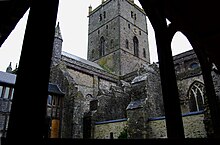
 
 
The Welsh architect John Nash was commissioned to restore the west front in 1793 to repair the damage done two hundred years previously. Eclectic in style (with Gothic and Perpendicular characteristics - the latter attributed partly to his destruction of the windows of the chapel of St Mary's College in order to reuse that tracery for his west front), his work soon proved to be substandard (as had his previous work on the chapter house). Within a century the Nash west front had become unstable and the whole building was restored by George Gilbert Scott between 1862 and 1870. The lady chapel was restored by public subscription in 1901 and the eastern chapels were restored through a legacy of the Countess of Maidstone between 1901 and 1910.
The cathedral suffered the pains of disestablishment in 1923, as did the whole Church in Wales. The diocese was made smaller by the removal of the Archdeaconry of Brecon to form the new Diocese of Swansea and Brecon. However, this left a large area as a diocese to govern and St Davids began to deteriorate as the centre of the diocese, being nowhere near the centre – the bishop’s residence had been at Carmarthen since the 16th century, but administration and the focus moved from the cathedral to the diocese's now largest town.
The 1950s saw the appointment of the Reverend Carl Witton-Davies as dean; appointed in his thirties, his driving vision and energy was short-lived as he was offered what some was believed as a preferment as Archdeacon of Oxford, but did not leave that position for the rest of his service in the church. The cathedral began to have life again and the famous Welsh Youth Pilgrimages to St Davids (Cymry'r Groes) led many to a life of service in the church and provided the Church in Wales with inspired clergy for a decade following.
The 1960s saw the restoration of St Mary’s College as the cathedral hall, for the use of the cathedral parish and for use as an area for art exhibitions and poetry readings. It was dedicated by Archbishop Edwin Morris in 1966 and the inaugural event was a poetry reading by the renowned poet R. S. Thomas, who served as a vicar in the Bangor diocese.
During the 1980s a number of official events in cathedral life took place: in 1981, Charles, Prince of Wales visited to celebrate the 800th anniversary of the consecration of the cathedral; and on Maundy Thursday 1982, Queen Elizabeth II distributed the Royal Maundy at the cathedral. This was the first occasion that the ceremony had taken place outside England. In 1989–90, the 1400th anniversary of the death of St David was presided over by the Archbishop of Wales, George Noakes, who was also diocesan Bishop of St Davids.
The decades leading to and immediately following the year 2000 have been the most notable in the cathedral's history since its construction. Firstly, the British Government decided to reinstate the title of "city" to St Davids and this was formally conferred by Queen Elizabeth II on 1 June 1995. The task that lay before the dean, the Very Reverend Wyn Evans, on his appointment in 1994 was huge: a new organ was badly needed and the west front needed extensive restoration. It was also thought time that the cathedral invested in its future by creating a visitor centre within the bell tower, enlarging the peal of bells from eight to ten and by the "reconstruction", or completion, of the cathedral cloisters to house the cathedral choir, vestries, an education suite, rooms for parish use and a refectory as a reminder of the monastic beginnings. The first project was the restoration of the west front, with the original quarry that was used for stone at Caerbwdi Bay being reopened. This phase was completed in 1998, in time for the organ to be dismantled and rebuilt by the organ builders Harrison and Harrison of Durham. The organ was completed in the middle months of 2000 and dedicated on 15 October that year.
The ring of bells was cast by Whitechapel Bell Foundry of London and presented as a gift by the American Friends of St Davids Cathedral. The substantial task of rebuilding the cloisters as an education centre and refectory began in 2003 and was completed in May 2007. The translation of Wyn Evans from dean to bishop led to the appointment of Jonathan Lean as dean in 2009.
The bells are not hung in the central tower of the cathedral but in the old gatehouse, Porth y Twr. There are 10 bells with the heaviest weighing 24 long cwt 3 qr 25 lb (2,797 lb or 1,269 kg) in D, the back eight bells were cast in 1928 by Mears & Stainbank, London and two trebles added in 2000 cast by Whitechapel Bell Foundry, London. The restored Shrine of St David was unveiled and re-dedicated by the Right Reverend Wyn Evans, Bishop of St Davids, at a Choral Eucharist on St Davids Day 2012.
There are at least three services said or sung per day, each week, with sung services on five out of seven days.
The cathedral choir at St Davids was the first cathedral choir in the United Kingdom to use girls and men as the main choir, rather than boys and men. (Salisbury Cathedral introduced boys and girls earlier on an equal basis, whereas St Davids uses girls as their "main" cathedral choristers.) There is also a boys' choir whose weekly Evensong is a major event within the cathedral week. They sing with the vicars choral regularly.
The St Davids Cathedral Festival runs through the Whitsun school holiday each year and showcases some of the world's best performers. The week sees performers, both professional and young, play in front of thousands. The cathedral choir serve as a highlight each year, being a very popular concert, as well as the Festival Chorus and Orchestra who perform a major work on the final night of the festival.
Gerald of Wales (Giraldus Cambrensis) in the 13th century relates the strange story of a marble footbridge leading from the church over the Alun rivulet in St Davids. The marble stone was called "Llechllafar" ("the talking stone") because it once spoke when a corpse was carried over it to the cemetery for interment. The effort of speech had caused it to break, despite its size of ten feet in length, six in breadth and one in thickness. This bridge was worn smooth due to its age and the thousands of people who had walked over it, however the superstition was so great that corpses were no longer carried over it. This ancient bridge was replaced in the 16th century and its present whereabouts is not known.
Another legend is that Merlin had prophesied the death on Llechllafar of an English king, conqueror of Ireland, who had been injured by a man with a red hand. King Henry II, whilst on a pilgrimage to Saint Davids, having come over from Ireland, heard of the prophecy and crossed Llechllafar without ill effect. He boasted that Merlin was a liar, to which a bystander replied that the King would not conquer Ireland and was therefore not the king of the prophecy. This turned out to be true, for Henry never did conquer the whole of  Ireland.     We have a group of trained volunteers, who are happy to guide visitors and pilgrims around the Cathedral. Please see the Ty'r Pererin page for more information. Contact: Please contact the Cathedral Office for further assistance or you can e-mail info@stdavidscathedral.org.uk - Please see the notices in the South Porch and the Weekly Pew Sheet

Normal pattern of worship

1st Sunday of every month
8.00am Holy Communion
9.30am Cymun Bendigaid (Capel Mair)
9.30am Parish Communion (Nave)
11.15am Choral Matins
6.00pm (4.00pm*) Choral Evensong
2nd Sunday of every month
8.00am Holy Communion (1662)
9.30am Cymun Bendigaid (Capel Mair)
9.30am Parish Communion (Nave)
11.15am Choral Eucharist
6.00pm (4.00pm*) Choral Evensong
3rd and 5th Sunday of every month8.00am Holy Communion
9.30am Bilingual Parish Communion
11.15am Choral Matins
6.00pm (4.00pm*) Choral Evensong
4th Sunday of every month8.00am Holy Communion (1662)
9.30am Cymun Bendigaid (Capel Mair)
9.30am Family Service (North Transept)
11.15am Choral Eucharist
6.00pm (4.00pm*) Choral Evensong
Daily Services (apart from Wednesday)8.00am (9.00am*) Morning Prayer & Holy Communion
6.00pm (4.00pm*) Evening Prayer or 6.00pm Choral Evensong
Wednesday8.00am (9.00am*) Morning Prayer (St Thomas' Chapel)
10.00am Holy Communion
6.00pm (4.00pm*) Evening Prayer or 6.00pm Choral Evensong
Friday12noon Prayers at St David's Shrine

St Davids Cathedral Bells
The bells are housed in a detached tower which is part of the 13th century gateway known as Porth y Twr. They were hung here in the 1930s after an anonymus donor paid for the tower to be repaired and strengthened. The original bells had been hung in the tower of the cathedral but they were removed in 1730 because of the danger of the tower collapsing. The only mediaeval bell left is in the Exhibition in the Tower Gate. Perhaps some of the metal in the present fifth bell is also from the earlier ring. There are ten bells in the ring.
For most of the year, there is a handbell practice each week on Wednesday 4pm to 5pm in Porth y Twr. For further information contact the Hand Bell Director, Melanie Northall, 01437-721890
The Tower bell practice is on Friday each week, 7:45 to 9:00pm. It is occasionally cancelled due to a concert in the cathedral. Please contact Sarah Green, 01437 720526 or 07717 522761 ls.green@tiscali.co.uk or Peter Hayward, 07986 539903.
Visitors are welcome at all practices.
Sunday Service ringing time is from 10:45am until 11:10am.
Requests to ring peals should be sent in writing to Sarah Green ls.green@tiscali.co.uk or to the Tower Captain Peter Hayward peterjaneh@hotmail.co.uk 07986 539903 giving as much notice as possible. The cathedral is a very busy place and we may have to revise arrangements to fit in with services set up at short notice. Fees for peal attempts are currently set at £60. Other bands who wish to do mixed ringing may also apply but charges will depend on length and type of ringing. Requests for peals or any other information about the bells may also be addressed to ls.green@tiscali.co.uk or peterjaneh@hotmail.co.uk
The two new bells, donated by the American Friends of St. Davids Cathedral, which arrived in St. Davids in February 2001, were dedicated by the Bishop of St. Davids the Right Reverend Huw Jones at 1200 on St. Davids Day (March 1st.) Click here to see them
Name Weight 
  Kgslbs
Dewi Sant (Saint David)Tenor122C2700
Sant Mihangel (Saint Michael)9th8701900
Sant Iago (Saint James)8th5601232
Deon (Dean)7th5101120
Esgob (Bishop)6th407896
Sant Andreas (Saint Andrew)5th356784
Sant Stinan (Saint Justinian)4th270594
Mair Fendigaid (Blessed Mary)3rd265582
Sant Caradog (Saint Caradog)2nd278611
Santes Non (Saint Non)Treble269591
The beautiful sounds that are heard when church bells are calling the faithful to their prayers are only achieved with long practice and experience.
First it is necessary to learn bell control, that is to make sure that you are ringing the bell and not vice versa. Then comes rounds which means that the bells are ringing in order. In St. Davids we have ten bells so rounds go 12345678901234567890 etc. Next comes call changes in which pairs of adjacent bells are called to change their order. For example four to two would produce 12435678901243567890 etc. Plain hunting is the next stage and here at one command all the bells start moving in relation to one another as follows 1234567890 2143658709 2416385079 4261830597 4628103957 etc. I hope you can follow that.
Finally comes method ringing which in the years since its invention has lead to many books of compositions which are meant to tax the ringer and give the listener a pleasurable experience. Using one or more of these methods experienced ringers will attempt quarter or whole peals to celebrate particular events such as Royal Weddings or the Enthronement of a Bishop or even for fun. At about two and a half seconds per round a peal can take up to three and three quarters of an hour, for about 5040 changes, which is a lot of energy to expend and requires a great deal of concentration.


Saturday, 21 September 2019


Fishguard

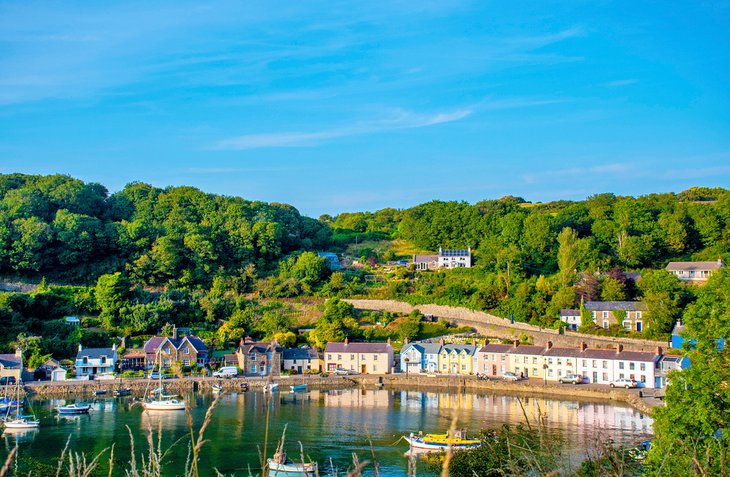
Fishguard (Welsh: Abergwaun, meaning "Mouth of the River Gwaun") is a coastal town in Pembrokeshire, Wales, with a population of 3,419 recorded in the 2011 Census. The community of Fishguard and Goodwick had a population of 5,043 in 2001 and 5,407 in 2011. Modern Fishguard consists of two parts; Lower Fishguard and the "Main Town". Fishguard and Goodwick are twin towns with a joint Town Council.
Lower Fishguard (locally known as 'Lower Town') is believed to be the site of the original hamlet from which modern Fishguard has grown. It is situated in a deep valley where the River Gwaun meets the sea, hence the Welsh name for Fishguard. It is a typical fishing village with a short tidal quay. The settlement stretches along the north slope of the valley.
The main town contains the parish church, the High Street and most of the modern development, and lies upon the hill to the south of Lower Fishguard, to which it is joined by a steep and winding road. The part of the town that faces Goodwick grew in the first decade of the 20th century with the development of Fishguard Harbour.
Fishguard is within the historic Welsh cantref of Cemais, and part of the Welsh province of Dyfed, within the historic Principality of Deheubarth. The coasts of Wales were subject to Norse raids during the Viking Era, and in the latter part of the 10th century Norse trading posts and settlements emerged within Dyfed, with Fishguard established sometime between 950 and 1000 AD.
The town name Fishguard derives from Old Norse Fiskigarðr meaning "fish catching enclosure", indicating that there may have been a Scandinavian trading post, although no evidence has been found.  Called Fiscard until the turn of the 19th century when the name was Anglicised, Fishguard was a marcher borough and in 1603 was described as one of five Pembrokeshire boroughs overseen by a portreeve. The Norman settlement lay along what is now High Street between the church at its north end and the remains of a Norman motte at its south end.
Lower Fishguard developed as a herring fishery and port, trading with Ireland, Bristol and Liverpool. In the late 18th century it had 50 coasting vessels, and exported oats and salt herring. In 1779, the port was raided by the privateer Black Prince, which bombarded the town when the payment of a £1,000 ransom was refused. As a result, Fishguard Fort was completed in 1781, overlooking Lower Fishguard. The port declined in the latter half of the 19th century.
Fishguard's ancient Royal Oak public house was the site of the signing of surrender after the Battle of Fishguard in 1797, the last successful invasion of Britain, when a force of 1,400 French soldiers landed near Fishguard but surrendered two days later.  The story is told in the Fishguard Tapestry created for the 200th anniversary to emulate the Bayeux Tapestry, and is displayed in the Town Hall Library.
A 19th-century vicar of Fishguard, the Rev. Samuel Fenton MA, wrote the book The History of Pembrokeshire.
The ancient Parliamentary Borough of Fishguard was contributory to the Borough of Haverfordwest. In 1907, it was created an urban district, which included Goodwick from 1934 until it was abolished in 1974. During the Second World War, the Fishguard Bay Hotel was Station IXc of Special Operations Executive where submersibles were tested in Fishguard Bay.
Fishguard & Goodwick Golf Club was founded in 1921 and closed in the 1960s.
 Image result for fishguard wales

James John Hamilton House

 A Beautifully Refurbished School House James John Hamilton House is an old School House in the heart of the coastal town of Fishguard, in a quiet side street a stone’s throw from the centre of town. It has been luxuriously refurbished to provide top quality holiday accommodation. There are five bedrooms, three en-suite and one with it’s own private adjoining bathroom that together provide ample room for up to 8 adults and 2 children. A large sunlit living room and modern fully equipped kitchen are situated on the first floor with one bedroom and bathroom, the other three en- suite bedrooms are on the ground floor along with an extra shower room. An additional ‘loft’ bedroom has been added this year with en-suite shower, sink and toilet. With modern fittings and eclectic antique furnishings it offers the perfect space for family get togethers, groups of friends or couples and allows perfect access for those choosing to explore the beautiful coast of West Wales. Outside there are two private parking spaces and a barbecue/al fresco dining area where you can relax with a glass or two after your day’s adventures. The quaint market town of Fishguard offers a range of restaurants, shops, pubs and amenities yet remains quiet and peaceful even in the height of the summer. There are beaches, coastal walks, adventure activities and wildlife watching all within a few miles of the front door. Eat, drink, relax and laugh together in the light, spacious living room where the exposed beams and low feature windows echo the original use of this beautiful old building. Comfortable leather couches, cosy throws and squashy cushions welcome you home from the days activities or offer comfort until breakfast is done and you are ready to set off and explore. For stay at home days and chill-out evenings, full wifi and internet connected TV provide alternative entertainment options and keep everyone amused. e-mail: stephenism@hotmail.com  Tel: 01348 874288 mob: 07813 678570

Image result for James John Hamilton House


Friday, 20 September 2019


Pontypridd Wales

Go north into the valley region and bump into this town of bus terminals.

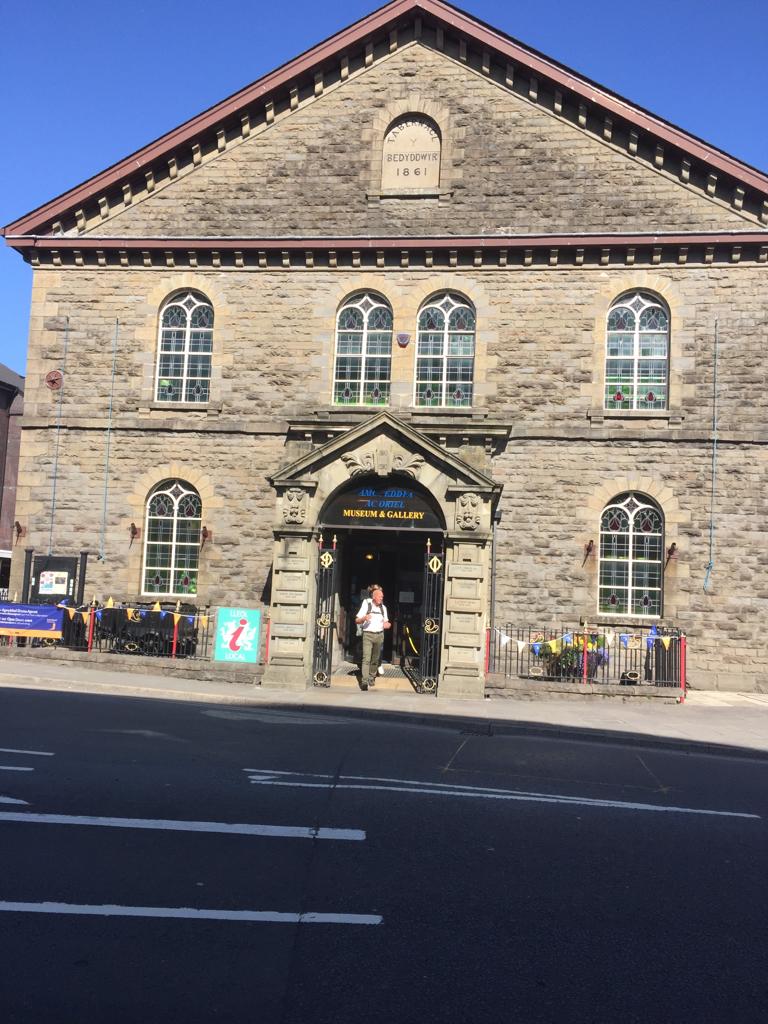
Pontypridd Museum.

Bridge Street, Pontypridd CF37 4PE, Wales:-An old chapel now a museum, top floor as a selection of military item mainly from the Welch Regiment 41st of foot, and mining items from the past, also on show are the Banners from the different pits, this little museum has all the charm of a small museum with the mind of a big museum, could take some time to see all the items, the history is there for you to find, so take your time and look around see what you can find. As with local museum conventions, start with celebs and critical events of the proximal region. You can start with the first floor for these.  The ground floor currently holds this memorial to WWI soldiers from Pontypridd.
The first floor features multiple models of collieries. You can imagine the scale of coal-mining in the area by looking at the scale of production. An impressive collection of miners’ lamps – in chronological order. From naked flame to safety lamps to electric. As you traverse through the technological development, you’ll also realize how these changes have helped alleviate the hardship of the coalmining industry. (Now go outside to enjoy the view of River Taff.)


Caerphilly Castle

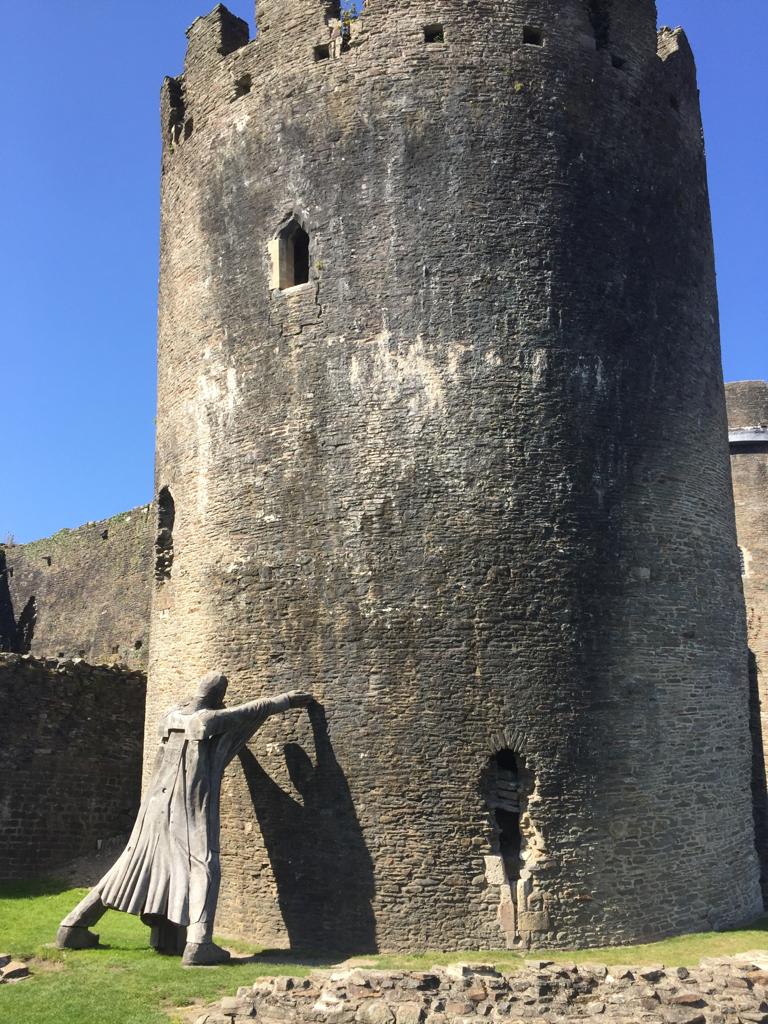
Castle Street, Caerphilly CF83 1JD, Wales :-The fortress sprawls over a huge area making it the largest castle in Wales. Like the famous cheese, the castle has long been synonymous with Caerphilly. It dominates. Hogs the limelight. Think slumbering giant awaiting a call to arms. It's also a great backdrop for TV and film. It secured a starring role recently in the popular BBC TV series Merlin.


The Royal Mint Experience 

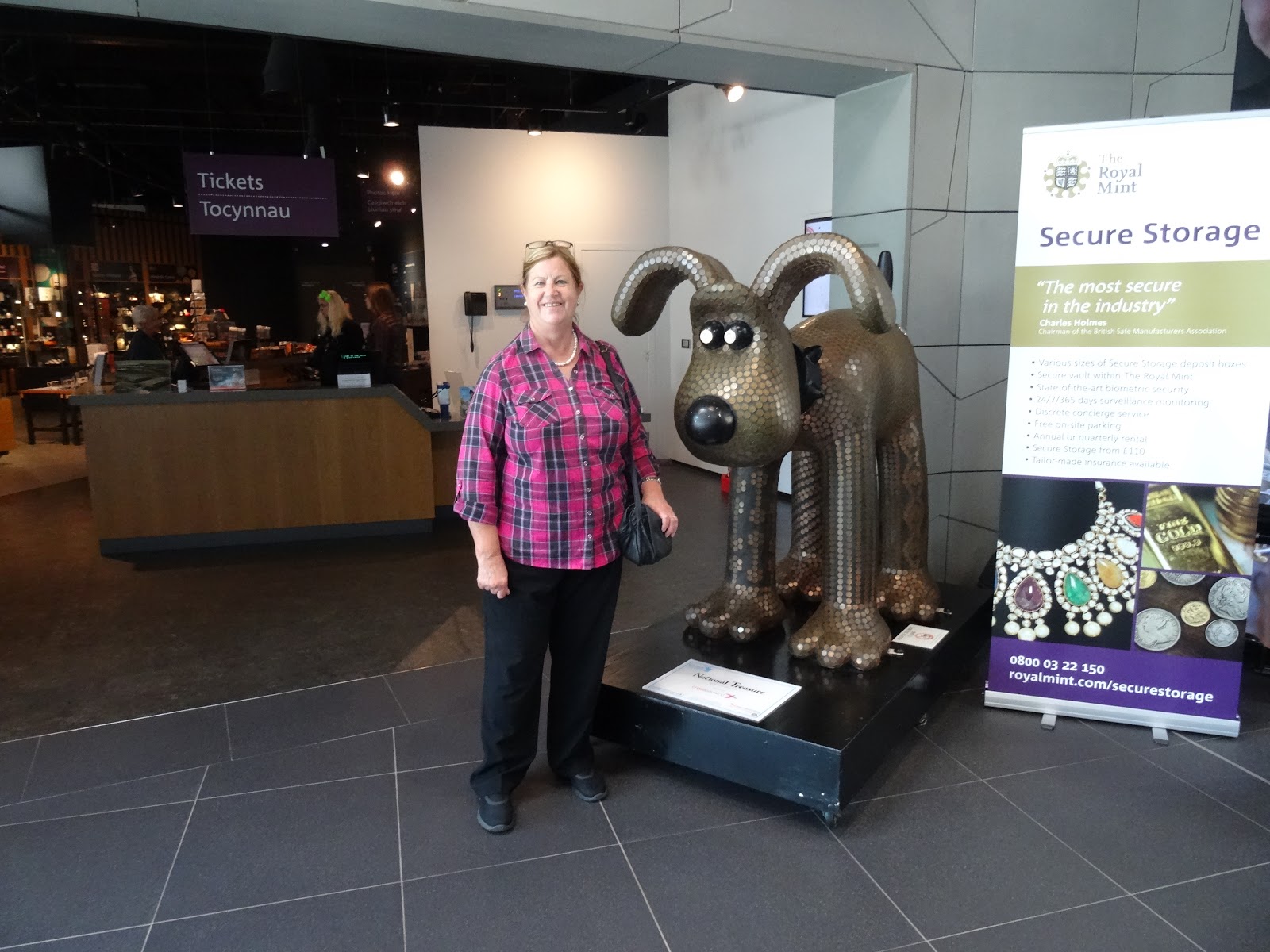
 Heol-Y-Sarn | Cardiff, Llantrisant CF72 8YT, Wales:- is the only place in the world where you can watch the United Kingdom's coins being made. Go behind the scenes to follow the journey of a coin from a blank to a bank in our 45-minute Guided Factory Experience. After your Factory Experience, wander at your own pace through the Interactive Exhibition, discovering the incredible processes needed to make a coin. Come face to face with British monarchs over the past 1,000 years. Get up close to the London 2012 Olympic and Paralympic medals, and listen to the stories of those whose bravery has been rewarded with the UK's gallantry and service medals. Touch and hold a 400oz Gold Bar- worth approximately £400,000!


Nantgarw China Works-CF157TB

Tyla Gwyn, Nantgarw- Rhondda Cynon Taff, CF15 7TB-Wednesday – Sunday- 10:00am – 4:00pm
What makes Nantgarw Porcelain special?
Nantgarw China Works is the only surviving early 19th century porcelain works in the United Kingdom. In the years 1813-1814 and again in the period 1817-1820 the finest porcelain in the world was produced here in Wales by William Billingsley, one of the most remarkable porcelain painters and manufacturers of his time.
What is porcelain?-
Porcelain is a vitrified (glass-like) ceramic with a white, fine-grained body that is usually translucent, as distinguished from earthenware, which is porous, opaque, and coarser.
Types of porcelain-There are two main types of porcelain:
Hard-paste porcelain typically the type of porcelain made by the Chinese for more than a thousand years. This is extremely hard, can be slightly gray in colour and has some translucency. It needs to be fired at high temperature.Soft-paste porcelain dates back to early attempts by European potteries in the 18th century to replicate Chinese porcelain by adding a ground glass type substance (known as a frit) to china clay. This porcelain is softer, can be fired at lower temperatures but often lacks strength being prone to collapsing during firing. It is expensive to make due to extra firing costs of the frit and relatively expensive ingredients.
There is also a hybrid – bone china which combines bone ash to hard paste porcelain ingredients to giver a whiter more translucent body and added strength and which can be fired at lower temperatures than hard-paste porcelain.

Nantgarw Porcelain-
At Nantgarw William Billingsley perfected his porcelain recipe with the addition of a variety of ingredients known only to him He succeeded in producing the finest porcelain ever made.
Nantgarw Porcelain is unique in that it is a bone ash/frit based soft-paste porcelain body which no other porcelain can come close to in translucency or whiteness. Furthermore, the glaze on Nantgarw porcelain is the perfect complement to enamelled decoration giving the colours true vibrancy and allowing the decoration to merge into the glaze.

William Billingsley was born in Derby in 1758. He was apprenticed at the William Duesbury Derby China Works 1774. In November 1780 William Billingsley was married to Sarah Rigley at St Alkmunds church in Derby. They had three children: Sarah born in 1783, James, who died in his infancy born in 1793 and Lavinia born in 1795. He is particularly associated with the rose which he painted in all its aspects. He introduced the new style of painting known as the wiping out process when painting flowers. The ‘Prentice Plate’ was used in the Derby factory as an example of the standard that was expected of new apprentices.
After experimenting in firing porcelain in a small kiln installed at his home, Billingsley decided to leave Derby in 1795. Be the decoration so fine, its beauty could never otherwise but be marred by an inferior body and this Billingsley knew well.
He moved constantly and worked at a number of different potteries. At Torksey, Lincolnshire he first came into contact with Samuel Walker, who later married his daughter Sarah in 1812. The family arrived at Flight Barr and Barr’s porcelain factory at Worcester and between 1809 and 1812 Billingsley was instrumental in refining its porcelain recipe whilst Walker developed new kiln designs.
Their departure from Worcester was abrupt and followed the end of their period of contract. Billingsley and Walker were bound by the owners in the sum of £1,000 not to disclose to any third party details of the ‘new method of composing porcelain’ which they had developed at Worcester.
Their arrival at Nantgarw late in 1813 and the subsequent story can be followed elsewhere on this site.Following his departure from Nantgarw, Billingsley worked for the Coalport China factory. He died on 16th January 1828, almost unmourned and was buried in an unmarked grave in the parish of Kemberton near Coalport.

In 2017 Nantgarw China Works undertook a project to recreate the original recipe for Nantgarw Porcelain which had been lost for over two hundred years. This successful completion of this project has enabled our current artist in residence to start making new contemporary work from this exceptional porcelain body. A small number of items made from this porcelain will be sold to help support the sustainability of the museum.